Precision Pollination: Connecting Pollinator Activity to Fruit Crop Performance
Researchers are applying in-field sensors and AI to directly connect pollinator activity to fruit set, yield, and quality. This emerging approach moves pollination monitoring from assumption to real-time, data-driven decision support for growers.
Moving Beyond Assumptions in Fruit Crop Pollination
Fruit production depends on effective pollination, yet most commercial decisions still rely on visual field inspection and generic hive recommendations. As weather variability increases and pollinator populations shift, this approach can leave gaps unaddressed and yields suboptimal.
To bridge this gap, researchers at the James Hutton Institute in the UK are partnering with AgriSound to develop and validate technologies for precision pollination monitoring. Their goal is to help growers pinpoint pollination shortfalls and make informed, timely decisions about intervention and crop management.
The Technology: Real-Time Sensing and AI for Pollinator Monitoring
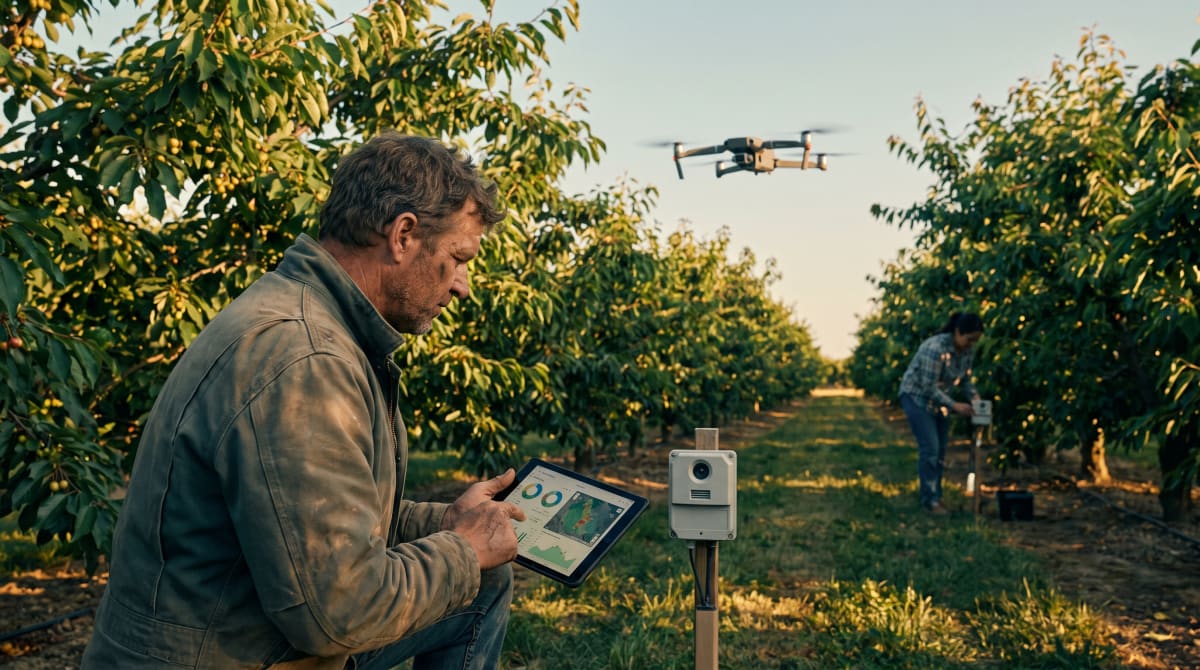
The project builds on the AgriSound Precision Pollination platform, which uses devices like Polly bioacoustic sensors along with artificial intelligence to monitor activity from honeybees, bumblebees, solitary bees, and hoverflies across fruit crops. According to the researchers, these systems are being expanded to serve strawberries, blueberries, raspberries, blackberries, and cherries, all crops where pollination directly determines fruit set and marketable yield.
This approach substitutes assumption with actual measurement. Instead of guessing at pollinator presence based on weather or hive placement, bioacoustic sensors track pollinator visits continuously. Algorithms analyze the sound signatures of different bee and fly species, providing species-level data on activity throughout the day.
Integrating Crop Performance and Environmental Data
A key element in the research is correlating these pollinator activity data with direct crop outcomes. The validation phase includes the use of smart-tag observations, time-lapse imaging, and environmental monitoring (such as microclimate sensors) in combination with yield and fruit quality assessments.
By linking pollinator movement patterns with ground-level metrics like fruit set and final yield, the research team can address questions like:
- Which crops or fields are underserved by pollinators and when?
- How do pollination rates correlate to yield variability or reduced fruit quality?
- Are interventions (such as relocating hives or targeted hand pollination) truly necessary, or is actual coverage adequate?
As Dr. Susan McCallum, Soft Fruit Geneticist at James Hutton Institute, explained, this technology can “deliver valuable, real-world insights that will help growers and breeders make more informed decisions and build a more resilient and sustainable future for fruit production.”
Applications for Precision Crop Monitoring
For growers operating in regions with variable pollinator populations or competing pollination windows, such as diversified row-crop operations in Idaho or specialty-crop operations in Hawaii, this system offers several direct benefits. Real-time monitoring allows scouting teams to identify where pollinator coverage is strong and where it is lacking at the field block level, even within a single operation with mixed environments.
Integration of pollinator activity data with NDVI imagery or aerial crop scans from drones creates a more complete map of what drives intra-field yield variation. Instead of attributing low yields to abiotic stress or nutrition gaps alone, fruit set and pollination can be quantitatively assessed, informing future management.
Drone-enabled field documentation also dovetails with these advances: high-resolution imaging can confirm the impact of targeted pollination interventions, while field records can track pollination events, timing, and outcomes year over year.
Genetics and Varietal Selection for Enhanced Pollination
Another major thread of the project aims to inform breeding decisions by examining how plant traits, such as flower structure, color, or nectar production, affect pollinator attraction and pollination efficiency. The team intends to use the field data to support development of fruit varieties that combine commercial traits with improved pollinator appeal.
For breeders, this means a pathway to varieties tailored not just for disease resistance or shelf life, but for their real-world performance in attracting pollinators reliably, which is critical as native bee populations fluctuate and managed hive costs rise.
Towards Actionable Decision Support
As Dr. Casey Woodward, CEO of AgriSound, put it: “Pollination is mission-critical to fruit production, but it is still too often managed through assumption. Our goal is to make precision pollination scalable across crops and useful as a day-to-day production tool.”
With the addition of crop performance data, environmental sensing, and algorithm refinement, these systems are positioned to provide actionable triggers for growers, such as alerting them when fruit set lags behind pollinator activity, or when field variability in pollination points to a need for adjusted management.
Implications at the Farm Level
In practice, these advances mean field managers can:
- Map pollination activity spatially alongside NDVI, flowering, and yield data
- Identify under-pollinated blocks before yield loss occurs
- Adjust practices or timing of interventions based on quantifiable need
- Document pollination events for traceability and year-over-year analysis
- Inform breeding or sourcing of varieties that maintain yield advantage under real pollinator conditions
All these steps move the sector away from blanket recommendations and toward data-driven, well-documented management, a shift that matches the broader adoption of field analytics in U.S. specialty and row-crop production.
A Shifting Standard for Fruit Crop Productivity
While the UK project focuses on berry and cherry fruit sectors, the underlying approach, combining in-field sensors, environmental monitoring, aerial imagery, and analytics, is applicable to a wide variety of specialty crops. As weather and biological variability increase, the ability to pinpoint limiting factors like pollination brings new leverage for both operational efficiency and resilience.
For growers in regions like Arizona and Hawaii, where field conditions and pollinator presence can change dramatically within a few kilometers, and for those managing high-value crops with tight market windows, precision pollination is set to become a critical component of modern field intelligence.
Source: https://www.seedworld.com/europe/2026/09/22/precision-pollination-fruit-crops/