Drone Crop Monitoring: How to Scout 1,000+ Acres in a Single Day
Traditional crop scouting can't keep up with large-scale operations. Learn how drone-based monitoring covers thousands of acres per day with better detection accuracy than foot scouting.
The Scouting Problem at Scale
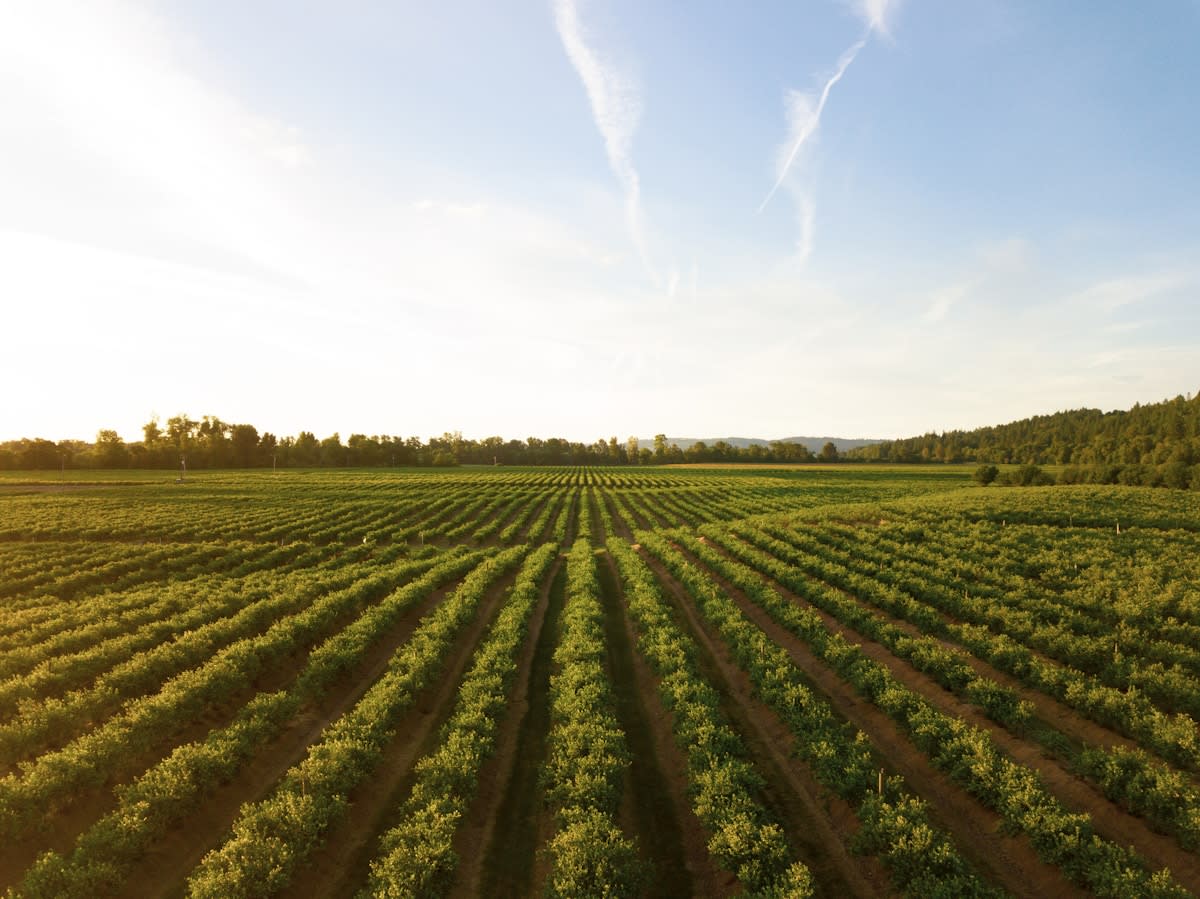
Crop scouting is one of the most important and least scalable activities in farming. A skilled scout walking fields can realistically cover 20 to 40 acres per day with thorough observation. For a 2,000-acre operation, that means 50 to 100 person-days of scouting per pass, and critical pest or disease issues can develop and spread between passes.
The agricultural labor shortage makes this math even worse. Finding skilled scouts who can accurately identify crop stress, distinguish field problems, assess plant damage, and evaluate disease symptoms is increasingly difficult and expensive. Many operations have reduced scouting frequency or eliminated it entirely, relying instead on reactive management that addresses problems only after they become visible from the field edge.
This approach leaves money on the table. Research consistently shows that early detection and intervention for crop stress events produces significantly better outcomes than late-stage response. The difference between catching a nutrient deficiency at V6 corn versus R1 can mean 20 to 40 bushels per acre in yield protection.
What Drone Scouting Captures
Drone-based crop monitoring detects issues that even experienced human scouts frequently miss:
Crop stress patterns visible in multispectral imagery reveal problems 7 to 14 days before they become apparent to the human eye. Chlorophyll concentration changes, cell structure alterations, and water content shifts all register in near-infrared and red-edge wavelengths before visual symptoms develop.
Spatial patterns provide diagnostic information that point observations cannot. A nutrient deficiency creates different spatial patterns than a drainage problem, crop injury, or disease outbreak. Seeing the entire field at once, with every plant represented, reveals patterns impossible to detect from ground level.
Stand counts and population assessment from high-resolution imagery quantify plant spacing and identify skip areas, double-plants, and emergence failures across entire fields. This data informs replant decisions with precision that sample-based counting cannot match.
Field variability mapping identifies crop stress, problem areas, and zone-level differences across the field, directing targeted application to specific areas rather than treating uniformly.
Flight Planning for Efficient Coverage
Effective drone scouting requires thoughtful flight planning to maximize coverage while capturing useful data:
Altitude selection balances coverage rate against image resolution. For general crop monitoring, flight altitudes of 100 to 200 feet provide sufficient resolution for stress detection while covering large areas efficiently. For detailed stand counts or plant-level detail, lower altitudes of 50 to 80 feet increase resolution at the cost of reduced coverage rate.
Overlap settings of 75 percent front and 65 percent side overlap are standard for agricultural mapping missions. These settings ensure complete coverage without gaps while providing sufficient image overlap for accurate map stitching.
Sensor selection depends on the monitoring objective. RGB cameras capture visible-light imagery suitable for general scouting, stand assessment, and visual damage documentation. Multispectral cameras with near-infrared and red-edge bands enable NDVI and vegetation index analysis for early stress detection.
At optimal settings, a single drone can survey 300 to 500 acres per hour. A full day of operations covers 1,000 to 2,000 acres depending on field size, logistics, and battery management.
From Raw Data to Field Decisions
The value of drone scouting is not in the images themselves. It is in the decisions they enable. The workflow from flight to action follows a clear path:
Same-day processing converts raw drone imagery into orthorectified maps and vegetation index layers. Modern processing pipelines deliver finished products within hours of flight.
Anomaly identification highlights areas of the field that deviate from expected performance. Color-coded maps make it immediately obvious where attention is needed.
Ground-truth verification sends scouts to specific GPS coordinates identified by the drone analysis. Instead of walking entire fields, scouts verify drone-detected anomalies in targeted visits that take minutes rather than days.
Management action based on verified information, whether adjusting irrigation, applying foliar nutrients, scheduling targeted application, or documenting conditions for insurance purposes.
Integrating Drone Scouting into Your Workflow
The most effective approach to drone scouting treats it as a complement to agronomic expertise rather than a replacement. The drone provides the eyes, seeing every acre at frequencies and resolutions impossible for human observation. The agronomist provides the brain, interpreting patterns, diagnosing causes, and recommending actions based on experience and knowledge.
Operations that integrate these capabilities, with regular drone monitoring feeding into agronomic consultation, consistently outperform those relying on either technology or expertise alone. The combination of comprehensive field visibility with experienced interpretation produces better decisions, faster responses, and higher yields per acre than either input independently.
Start with your most problematic fields, the ones where surprises at harvest are most common and most costly. The return on monitoring investment is highest where variability is greatest and the cost of missed detections is most severe.