AI Simulation Sets the Stage for Faster Field Robot Integration
Bonsai Robotics has launched a 3D simulation platform that allows autonomous field robots to train for specific field conditions before ever touching the ground, aiming to cut deployment time and improve practical readiness.
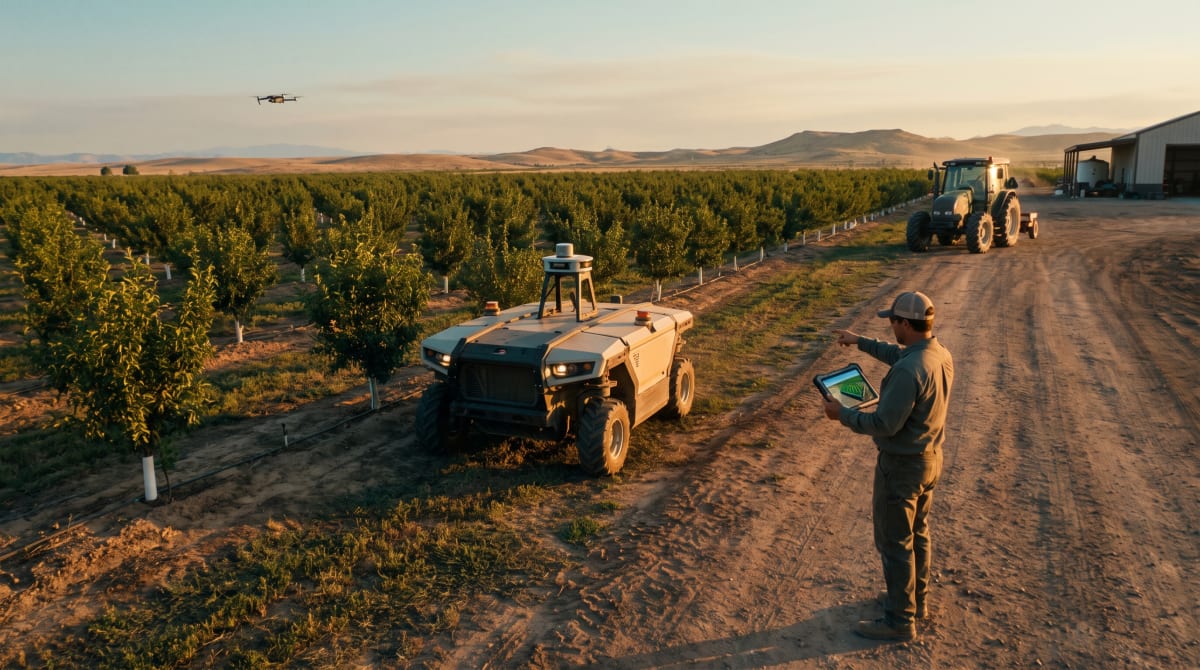
Simulating the Field Before Wheels Hit the Ground
Bonsai Robotics recently announced Bonsai World, a simulation platform designed to prepare autonomous farm equipment for real-world operations using 3D models built from satellite imagery and accumulated field data. The approach draws on more than 50 million data samples collected across over 1 million acres, as the company works to accelerate robot deployment in specialty-crop fields in the US and Australia.
The Bonsai World system begins with satellite imagery of the target field or facility and, using Google’s Gemini AI vision-language model, reconstructs it as a three-dimensional, high-fidelity environment. Simulations can account for localized crop types, terrain, weather, lighting, and even specific field hazards such as dust, debris, wildlife, and unexpected changes in ground conditions.
By running millions of simulated missions before a piece of equipment arrives, Bonsai aims to minimize on-site testing and software re-tuning, key limiting factors in the commercial rollout of robotic equipment. This is especially relevant for diverse crop environments or fields that present unique challenges, such as unreliable GPS signals or low visibility from airborne dust.
Training AI for the Unexpected
The value of simulation grows with the number of environments digitized and the breadth of scenarios encountered. According to Bonsai CEO Tyler Niday, every new environment “expands what the system understands.” Initially, the company built its models with an emphasis on harsh settings: places where GPS is unreliable, connectivity is patchy, and dust hinders vision systems. By modeling these outlier conditions up front, Bonsai wants its AI to anticipate obstacles and act effectively across varying circumstances, without costly, time-consuming manual retraining for every new block of farmland or novel situation.
The simulation platform does more than simply transfer real field data into a digital setting. It also generates new situations, such as animal crossings or machine-to-machine interactions, exposing the AI to occurrences not yet seen in actual operations. This feedback loop, a blend of real and synthetic data, strengthens the autonomy software’s decision-making, theoretically making each physically deployed robot more adaptable.
Linking Simulation to Actual Field Data
At the heart of Bonsai World’s promise is bridging the classic gap between how robots behave in simulation and their performance in unpredictable real-world farm environments. To construct its 3D environments, Bonsai uses satellite imagery as a base layer and applies Gemini’s interpretation capabilities alongside Bonsai’s own world modeling software. This allows for adjusting variables such as soil type, vegetation cover, machinery traffic patterns, even time of day and atmospheric conditions, creating a much denser training set for its AI.
While NVIDIA GPUs drive the heavy lifting of generating and running these simulations, it is the integration of actual operational data, gathered continuously by Bonsai’s Amiga platform and retrofitted machines in working fields, that ensures simulations are tied closely to the realities growers face. The platform supplements real-world observations from autonomous operations with AI-generated “what if” scenarios, aiming for readiness beyond the statistical norm.
Grower Implications: Speed, Adaptability, Visibility
The key promise for specialty crop producers and row crop operators alike is time savings. Typically, introducing an autonomous platform onto new terrain or crop requires several rounds of in-field adjustment: recalibrating navigation, adjusting for unforeseen obstacles, and working out software quirks unique to the crop or operation. By doing more of this in advance and in simulation, robots should launch more quickly and with greater baseline performance.
For operators in regions like Arizona or Idaho, whose fields can include sharp variability in terrain or micro-climate, a well-simulated view of their actual field enables better risk mapping before any hardware is delivered. The system’s ability to simulate operations in both familiar and unfamiliar crops, whether potatoes, specialty vegetables, or orchard fruit, also matters, as field characteristics and operational hazards differ dramatically between crop types and regions.
Because the simulated environments can be updated quickly from the latest satellite or drone-acquired imagery, growers theoretically gain much more timely and localized operational planning. For drone mapping and NDVI service providers, this type of simulation could translate into richer ahead-of-deployment consultation, helping anticipate coverage challenges or navigation bottlenecks before equipment ever rolls through the gate.
The Limits: From Simulation to Field-Proven Results
Despite high potential, Bonsai has not yet published independently verified data quantifying savings in setup time or the reliability of simulated-to-real world performance transfer. The article notes that performance has not been externally validated to show exactly how much, for a grower, simulation speeds up field readiness or reduces actual in-field troubleshooting.
This underscores an industry-wide challenge. While sophisticated AI and simulation tools promise greater efficiency, their impact depends on the fidelity of their training data and their alignment with a specific operator’s on-the-ground conditions. For organizations tasked with system rollouts in diverse and often remote production settings, the threshold for “good enough in simulation” versus “reliable every day in the field” remains case by case.
Technology Partnerships and Sector Expansion
Bonsai’s platform is built using Google Cloud’s infrastructure and interprets images through Google’s Gemini AI. For the demanding computing power behind AI training and environment rendering, NVIDIA GPUs supply the hardware backbone. Although Bonsai’s current ag focus is in the US and Australia and largely in specialty crops, the company is pushing toward broader sectors, including mining and defense, suggesting potential crossover as these industries share challenges around remote autonomy.
Why Simulation Matters for Agricultural Robotics
In the evolution of field robotics and automation, the ability to test, adapt, and optimize operations digitally before deploying in production settings represents a major shift. For growers managing complex field variability, equipment fleets, or precision application needs, this approach, if proven effective, could make it more practical to integrate autonomous platforms into season-to-season operation.
The potential to combine recent drone or satellite imagery with real-time operational data and AI simulation adds a new layer of intelligence for operational planning. It could also help speed up regulatory or insurance approval by providing auditable digital records of risk scenarios and mitigation strategies.
In summary, the rollout of digital twins and simulation-powered AI training is poised to lower the barriers to field robot adoption, but their full value will hinge on demonstrated success in closing the gap between the simulated and the actual. For now, this technology trend is one to watch for growers and investors keen on automation’s practical payoff in the field.